
WMIF MAIN SITE
2027 Event Site
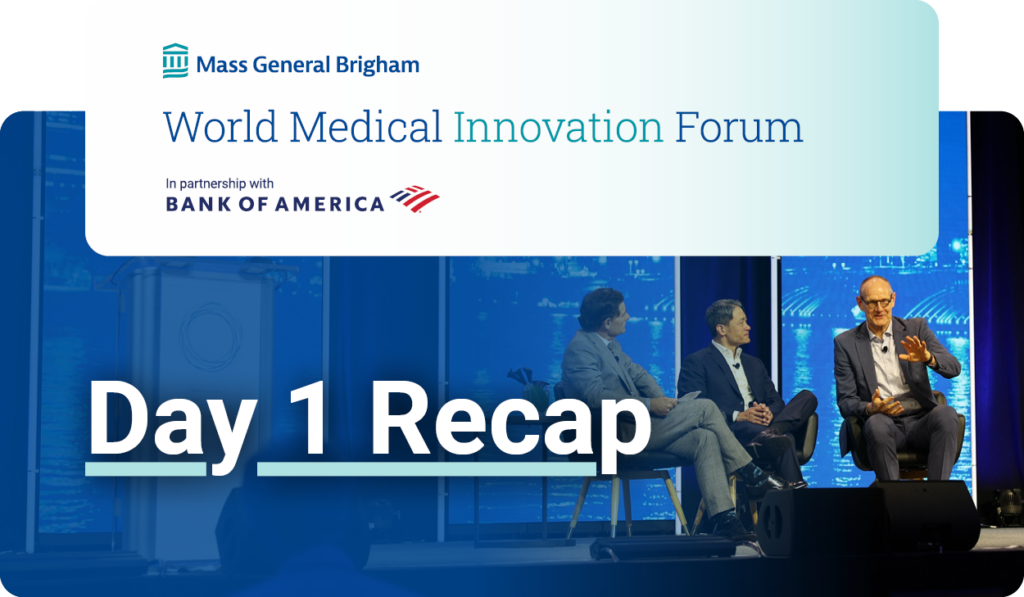
On the main stage and focused sessions, Day 1 moved from federal policy and global health system transformation to prevention, emerging therapeutics, diagnostics, commercialization and new models of care.
Every breakthrough begins with a patient waiting for what comes next. That idea carried through a day focused not simply on what science and technology can make possible, but what it takes to move innovation into care and reach patients.
Mass General Brigham Harvard faculty innovators took the First Look stage with technologies spanning therapeutics, diagnostics, devices and new platforms, including approaches to organ preservation, radiation-activated medicines, programmable anticoagulants, cell therapy and vascular calcification.
In Building the Next Generation of MedTech Breakthroughs, innovators and investors described a market where the science is advancing rapidly. Still, the bar for evidence, financing and adoption has risen with it. Panelists also focused on what happens after a technology works: whether it fits clinical workflow, produces measurable outcomes and can ultimately be scaled.
“Promise and potential was what you invested in. Now it has to be clinical efficacy.”
Elazer Edelman MD, PhD
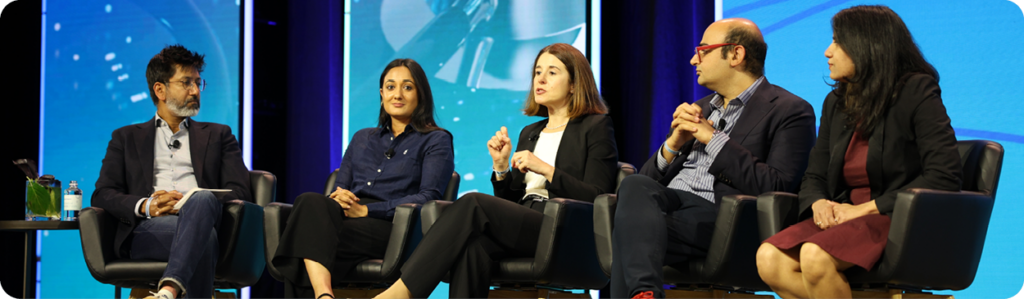
In How International Healthcare Leaders are Transforming Health Systems at Speed and Scale, leaders examined how specialized expertise can reach patients beyond major referral centers through new workforce models, technology and international collaboration.
The conversation included examples of remote and technology-enabled care, but also a reminder that greater efficiency should translate into more time and better care for patients, not simply more volume.
“Innovation happens close to the patient.”
Bjorn Zoega PhD
That same question of reach and access carried into the conversation between Mass General Brigham and Cleveland Clinic leadership, which explored how research, partnerships, digital tools and new care models can extend the impact of academic medicine beyond traditional campuses.
Several Day 1 conversations challenged medicine to move upstream.
In AI-Enabled Opportunistic Screening, panelists noted that most cancers are still identified through primary and first-contact care, while organized screening covers only a small number of cancer types. The opportunity discussed was whether years of patient data could help surface risk during the limited time of a routine clinical encounter.
Innovation Before Disease | The Next Frontier in Metabolic Health asked an even earlier question: how can healthcare, food companies, researchers and investors intervene before chronic metabolic disease develops, and can prevention be built at meaningful scale?
And Longevity | Toward a Model of Age, Aging & Therapeutic Rejuvenation focused less on simply living longer and more on healthspan. Panelists pointed to an approximately 20-year gap between lifespan and healthy lifespan in the U.S. and explored whether emerging science can narrow it.
“The greatest victories in health are when we avoid suffering altogether.”
Raj Panjabi MD
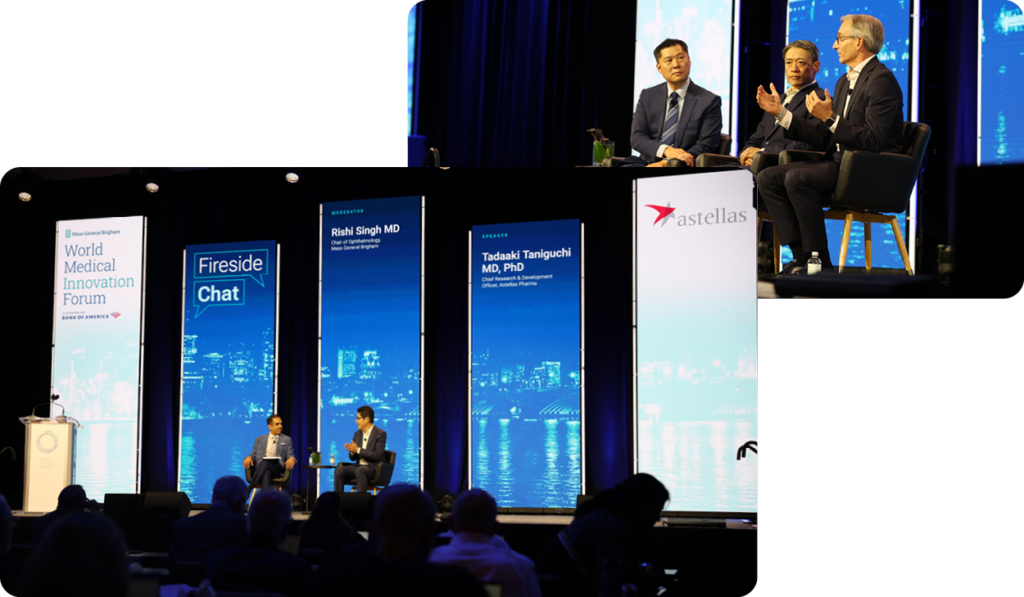
A series of industry conversations explored what happens when promising science meets the realities of healthcare delivery.
Discussions with leaders from Siemens Healthineers, Canon, Philips and Astellas ranged from imaging and earlier detection to AI adoption, workflow and R&D strategy. Bernd Montag argued that one of the biggest gaps between the promise of AI and its impact on the ground is not simply technology, but whether health systems and clinicians are ready to adopt it.
Later conversations moved into the therapeutic pipeline itself, including oncology at Merck and the continued pursuit of new approaches in Alzheimer’s disease at Genentech.
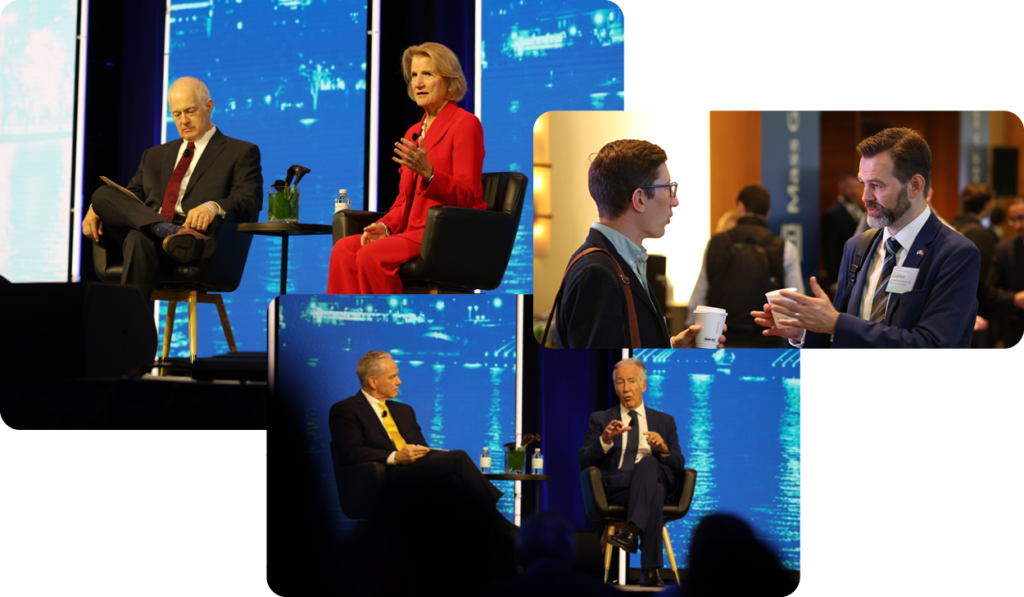
The day opened with two conversations on the policy environment surrounding medical innovation, with Senator Shelley Moore Capito of West Virginia and Congressman Richard Neal, Ranking Member of the House Ways and Means Committee. Topics ranged from biomedical research funding and rural health to access, NIH-supported research and the balance between enabling AI innovation and establishing safeguards.
Mass General Brigham and Bank of America present the World Medical Innovation Forum.
Thank you to Astellas and Genentech at the Champion level, and to Accenture, AstraZeneca, Canon, Philips, and Siemens Healthineers at the Strategic level, with Ozlo, Quarles, Thermo Fisher, and United Imaging at the Collaborator level, for supporting the 2026 Forum.

© 2026 Mass General Brigham Incorporated. All Rights Reserved
We use cookies to improve your browsing experience, analyze website traffic, and personalize content. By clicking “Accept All” you consent to our use of cookies. You can manage your preferences at any time. See our Privacy Policy.
We use cookies to run this site and, with your permission, to analyze traffic and personalize content. Choose which cookies to allow. See our Privacy Policy.
Required for the website to work. Always active.
Lets us measure website traffic and personalize content through Google Analytics. Nothing loads until you allow it.